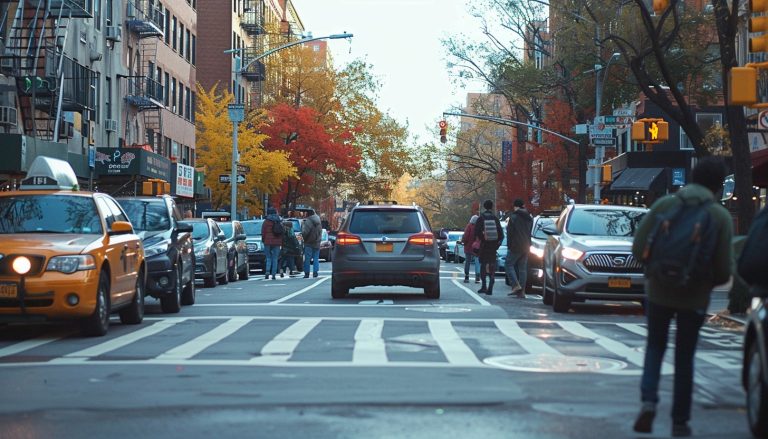
Intersection accidents happen in seconds, but proving who caused them can take months. If you've been injured in a Boston intersection car accident, you need to understand how fault works and what evidence matters most. This guide walks you through the process of proving fault in an intersection accident—and explains when you should call Peck Trial Attorneys.
Why Intersection Accidents Require Strong Evidence
Intersection accidents are often more complicated than other types of crashes. Unlike rear-end collisions, where fault is usually clear, intersection accidents often involve conflicting accounts of what happened. One driver claims they had a green light. The other says they did too. Both vehicles entered the intersection at roughly the same time. Who's at fault?
Massachusetts law requires you to prove negligence. That means showing the other driver owed you a duty of care, breached that duty, and caused your injuries. At intersections, this often comes down to traffic laws. If the other driver ran a red light or failed to yield, that can support a finding of negligence. But you need proof—not just your word against theirs.
Here's what makes intersection cases challenging: Massachusetts follows a comparative negligence rule. You can recover damages even if you're partially at fault, as long as you're less than 51% responsible. If you're found 50% or less at fault, your recovery may be reduced. But if you're 51% or more at fault, you recover nothing. This is why evidence matters so much. When you work with a Boston car accident lawyer, they can help navigate these complex liability rules and protect your rights.
Understanding Massachusetts Intersection Laws
Massachusetts General Laws Chapter 89 sets the rules for right-of-way at intersections. These laws establish who has the legal right to proceed first. When someone violates these rules, it can be used as evidence when determining fault. Understanding Massachusetts traffic laws is essential to building a strong case.
Red light violations are a clear example. If the other driver entered the intersection against a red light, they violated the law. Stop sign violations work the same way. Failure to yield while turning left is another common issue. If you were going straight through a green light and another driver turned left in front of you, they may have failed to yield. These violations often appear in police reports that document the accident scene.
Traffic laws don't automatically prove fault in court, but they can provide a strong foundation. A police report citing the other driver for a traffic violation may carry weight. Witness statements confirming the violation can further support your claim. Video footage showing the violation can be especially persuasive. Understanding these traffic laws can strengthen your position in settlement negotiations and help you work effectively with your personal injury attorney.
Why Choose Peck Trial Attorneys for Your Intersection Accident Case
Peck Trial Attorneys handles intersection accident cases throughout Boston and Massachusetts. Our experienced trial attorneys understand how these accidents happen and the types of evidence that can support a claim. We've successfully represented clients in complex intersection collisions across the region.
When you work with us, we take steps to investigate intersection accidents thoroughly. We may request traffic camera footage from the city, interview witnesses, and obtain police reports to evaluate potential evidence of negligence. In some cases, we work with accident reconstruction professionals to better understand how the collision occurred. Our team has recovered substantial compensation in Boston car accident cases, including settlements for intersection collisions and pedestrian accidents.
We also address insurance company tactics. Adjusters may try to shift blame or argue that you share responsibility. We respond to these arguments by gathering and presenting supporting evidence. Our goal is to build a strong claim and pursue fair compensation based on the facts of your case. When dealing with complex intersection liability, having skilled representation makes a significant difference.
Key Evidence That Proves Fault in Intersection Accidents
Several types of evidence can help establish fault in an intersection accident. Strong claims often rely on multiple sources of evidence working together to paint a clear picture of what happened.
- Police reports document the scene, speak with drivers and witnesses, and may issue citations. These reports can support your version of events. Under Massachusetts law, police documentation of traffic violations can be critical evidence. Officers trained in accident investigation can identify patterns that support liability findings.
- Traffic camera and surveillance footage from intersections or nearby businesses can show how the crash occurred. This visual evidence often proves decisive in intersection cases where accounts conflict. Many Boston intersections have traffic cameras that capture collisions in real time, providing objective proof of fault.
- Witness statements provide independent accounts that can help clarify what happened, especially when multiple witnesses provide consistent descriptions. Our Boston personal injury lawyers know how to locate and interview witnesses effectively, preserving their testimony before memories fade.
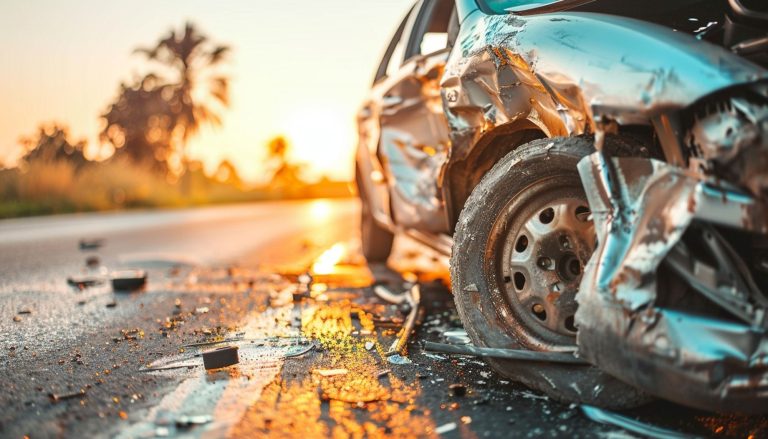
- Vehicle damage patterns indicate how the vehicles collided based on the location and severity of damage. Skid marks and debris on the roadway can help identify braking points and the area of impact. These physical indicators often corroborate witness accounts and help establish the sequence of events.
- Event data recorders in some vehicles record speed, braking, and other inputs before a crash, which may help reconstruct events. This technical evidence can be crucial in complex intersection collisions where the exact moment of impact matters. Modern vehicles increasingly contain this data, which can be extracted and analyzed by experts.
How to Document an Intersection Accident Scene
If you're injured in an intersection accident, your first priority is safety and medical care. But if you're able, documenting the scene can help preserve important evidence that supports your claim.
Photograph vehicle damage from multiple angles, including close-ups and wide shots. Document the intersection layout, traffic signals, street signs, and road markings. Collect witness names and contact information, and note what they observed. Record weather and road conditions at the time of the crash. Preserve dashcam or nearby surveillance footage if available. File a police report as soon as possible.
Taking these steps immediately after an accident can significantly strengthen your claim when working with a personal injury attorney. The more evidence you preserve at the scene, the stronger your case becomes. Don't rely on memory alone—document everything while details are fresh.
Common Intersection Accident Scenarios in Boston
Boston intersections see recurring accident patterns. Understanding these scenarios can help you recognize liability issues in your own case and identify when you need legal representation.
- Running red lights or stop signs can lead to broadside or T-bone collisions. These high-impact crashes often result in serious injuries requiring immediate medical attention. Impaired driving frequently causes drivers to run traffic signals.
- Failure to yield while turning left often results in crashes with oncoming traffic. Left-turn accidents are among the most common intersection collisions in Boston. These accidents frequently involve pedestrians in crosswalks as well as other vehicles.
- Distracted driving may cause drivers to miss signals or other vehicles. Texting, phone use, and other distractions contribute to intersection accidents at alarming rates. Proving distracted driving strengthens your liability case significantly.
- Speeding reduces reaction time and increases crash severity. Drivers traveling above the speed limit have less time to stop at intersections. Speed is often a contributing factor in the most serious intersection collisions.
- Obstructed views from parked cars, buildings, or trees can contribute to collisions. Poor visibility at intersections creates dangerous conditions that drivers must navigate carefully. When visibility issues contribute to an accident, liability may be shared.
What Happens After You Prove Fault
Once there is sufficient evidence supporting the other driver's negligence, the claims process moves forward. You submit documentation of your injuries, medical treatment, lost wages, and other damages. The insurance company reviews your claim and evaluates its merit.
Settlement negotiations may follow. The insurer may make an offer, and your attorney can assess whether it reflects your damages. If necessary, negotiations continue. Our firm has successfully negotiated substantial settlements in car accident cases, recovering millions for injured clients. We understand insurance company tactics and know how to counter lowball offers.
If a resolution is not reached, litigation may be an option. Your attorney presents evidence, and a judge or jury determines liability and any damages awarded. We're prepared to take your case to trial if necessary to secure fair compensation.
Damages may include medical expenses, lost wages, pain and suffering, and property damage. In some cases, additional compensation may be available for long-term impacts. Serious injuries from intersection accidents may warrant additional damages for permanent disability or disfigurement.
Frequently Asked Questions About Intersection Accident Fault
What if both drivers share fault for the intersection accident?
Massachusetts allows you to recover even if you share fault. Under the state's comparative negligence rule, you can recover as long as you're 50% or less at fault, though your compensation may be reduced by your percentage of fault. If you're 51% or more at fault, you cannot recover damages. An attorney can work to present evidence that supports your position and limits your share of responsibility. This is why having skilled legal representation matters—your attorney fights to minimize your percentage of fault.
How long do I have to file a claim after an intersection accident?
Massachusetts generally gives you three years from the date of the accident to file a personal injury lawsuit. This is called the statute of limitations. Acting sooner can help preserve evidence and strengthen your claim. Don't delay in contacting a Boston personal injury lawyer to protect your rights and ensure you meet all filing deadlines.
Do I need a lawyer to prove fault in an intersection accident?
You are not required to hire a lawyer, but legal representation can help with investigating the accident, gathering evidence, and handling communications with insurers. An attorney can also evaluate settlement offers and advise you on the next steps. Most personal injury attorneys, including those at Peck Trial Attorneys, work on contingency, meaning you pay nothing unless you recover compensation. Our experienced attorneys can guide you through every step of the process.
Contact Peck Trial Attorneys for a Free Consultation
If you've been injured in a Boston intersection car accident, you can contact Peck Trial Attorneys to discuss your situation. Call 857-557-7325 for a free consultation. We can review your case, explain your options, and answer your questions. We handle cases on a contingency fee basis, meaning you do not pay legal fees unless compensation is recovered. Our Boston car accident lawyers are ready to help you get the compensation you deserve.
Related Posts
- Proving Distracted Driving in Your Massachusetts Car Accident Claim
- Maximizing Your Claim: The Role of Witnesses in Massachusetts Car Accident Cases
- Navigating Liability in Self-Driving Car Accidents in Massachusetts
- How Inclement Weather Impacts Your Car Accident Claim in Massachusetts
- Your Rights After a Pedestrian Accident in Massachusetts